

About Us
Visualize the invisible world with a giant microscope
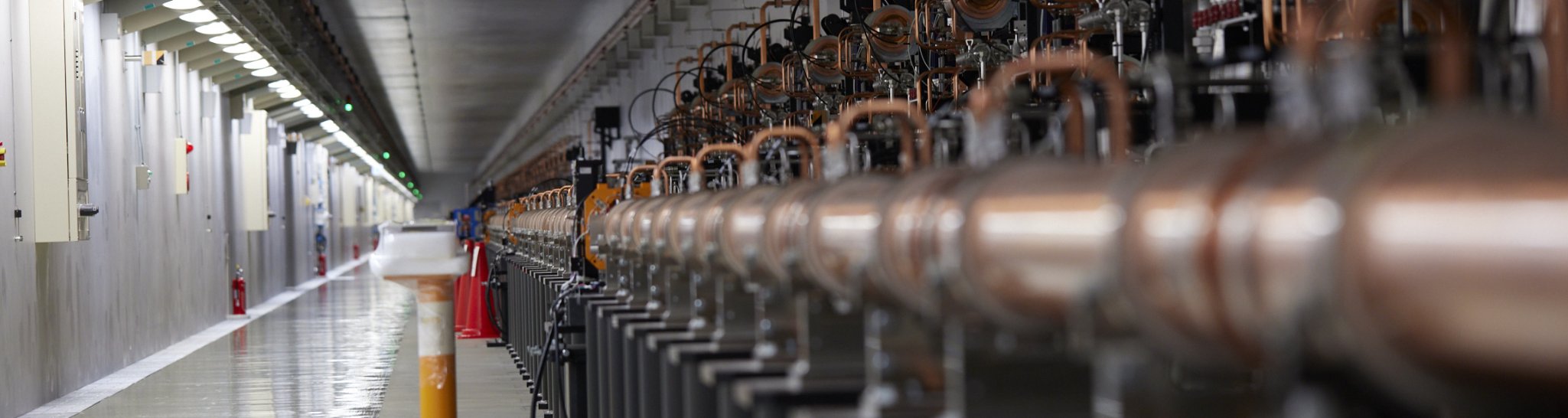
Experience the world's most advanced technology
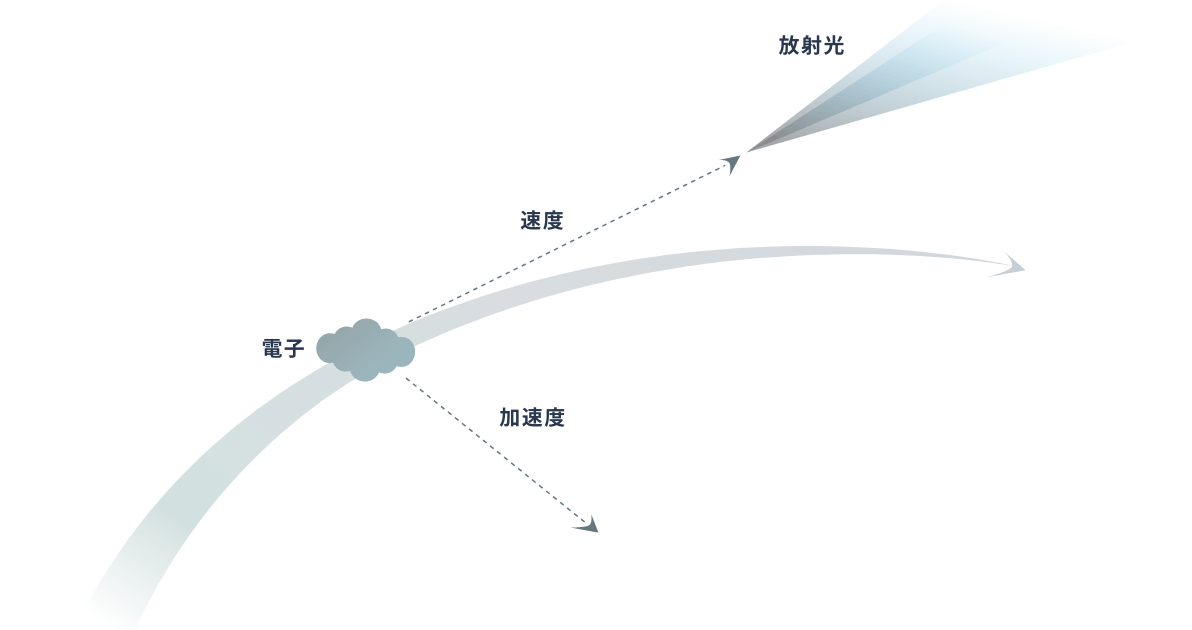
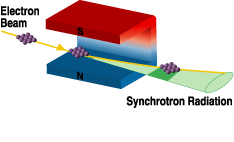
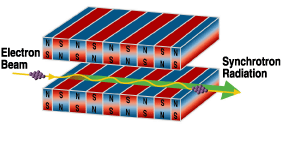
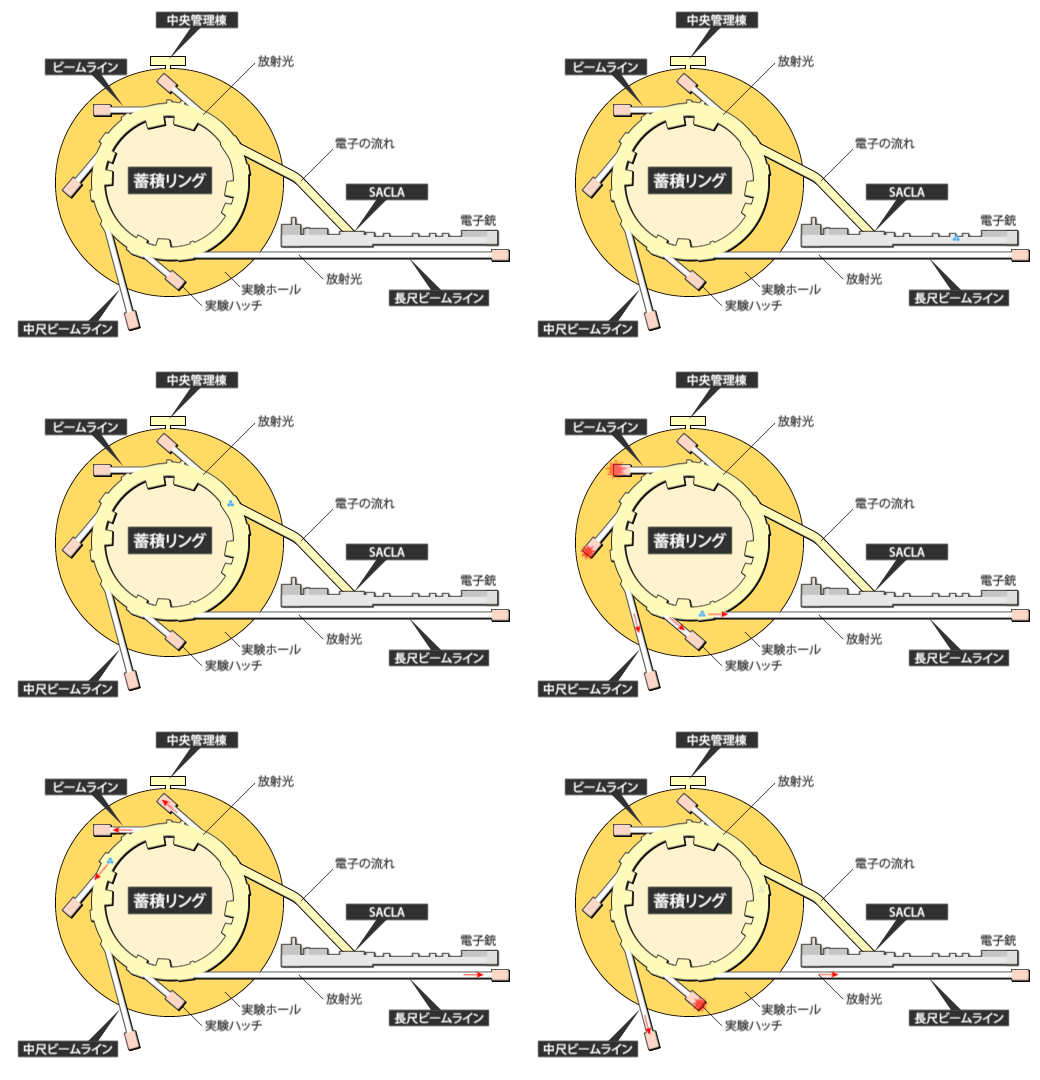
Electrons travelling in a straight line at approximately the speed of light generate electromagnetic waves when their direction of movement is changed by influences such as magnets. These electromagnetic waves are known as Synchrotron Radiation. This phenomenon was first observed about 50 years ago with an electron synchrotron (Electron accelerator). The synchrotron radiation brightness depends on the electron energy being high, and the change of direction being large. Higher energy electrons, and a large change in direction will result in shorter wavelengths of radiation, such as X-rays.
Electrons create a surrounding electric field due to their negative charge, which can be considered as a virtual photon cloud. When high energy electrons are bent in a magnetic field, virtual photons are shaken off and emitted as real photons. This is Synchrotron Radiation.
A synchrotron radiation facility is a facility that conducts experiments and research using Synchrotron Radiation generated from accelerated high-energy electron beams.
History of synchrotron radiation facilities in the world
Currently, there are more than 30 Synchrotron Radiation facilities around the world. Also, in Japan, 7 Synchrotron Radiation facilities are in operation and one new facility is scheduled to go live in 2021. The history of Synchrotron radiation facilities began when Synchrotron Radiation was first directly observed in the 1940s, and the first generation of synchrotrons were born. Next, in the 1970s the second generation of accelerator development began; higher energy electrons were achievable, synchrotron radiation in shorter wavelengths such as X-ray regions became obtainable, and it became possible to supply stable synchrotron radiation through the use of a storage ring that keeps the orbital electron energy constant. As a result, Synchrotron Radiation accelerators and experimental equipment have been constructed in quick succession. Synchrotron Radiation began to spread rapidly with the development of biotechnology and nanotechnology in the 1980s. More sophisticated and diverse needs have been growing since the 1990s, when the construction of third-generation synchrotron radiation facilities around the world began to combine high-performance storage rings and undulators to obtain brighter synchrotron radiation. Thus, SPring-8 was born.
SPring-8 and SACLA
SPring-8 has developed a number of new technologies that will advance synchrotron radiation science around the world. These technologies have been realized with a brand new X-ray Free Electron Laser Facility called SACLA. Synchrotron radiation facilities are being constructed around the world, with the technology discovered at SPring-8. SPring-8/SACLA has the ability to illuminates the nano world. Beyond analyzing for mere observation sake, it provides “solutions” to unravel new features of the nano world.


