


Light to answer the "why"
Synchrotron radiation is electromagnetic waves generated when electrons are accelerated to near the speed of light and have their direction changed by magnets.
Synchrotron radiation from SPring-8 and SACLA elucidates the properties of matter at the atomic and molecular levels,
It is utilized for cutting-edge research in a wide range of fields.
we are also advancing research and development toward the next-generation SPring-8.
News
-
SPring-8UPDATE :NEW
Suspension of SPring-8 Operations for the SPring-8-II Upgrade -
OTHERUPDATE :Notice of Wing Shinki bus timetable revision (effective April 1)
Events
-
2026
Mar 10, 1:30 PM – Mar 10, 4:50 PMThe 122nd SPring-8 Advanced Utilization Technology Workshop / The 21st SPring-8 Metal Materials Evaluation Study GroupAP Shinbashi 4F, Workshop: Room F, Technical Exchange Meeting: Room E -
2026
Jan 30, 10:00 AM – Jan 30, 5:00 PMMaterial Strategy Promotion Symposium 2026 (MatISS 2026)Tokyo Big Sight, Conference Building, 1st Floor, Reception Hall
Press Releases
-
SPring-8Novel Materials Design Approach Achieves a Giant Cooling Effect and Excellent Durability in Magnetic Refrigeration MaterialsUPDATE :

-
SPring-8New Synchrotron Radiation Experimental Database to Support Fuel Cell Material Development – Accelerating Data-Driven Materials Research with High-Quality Data Management –UPDATE :

-
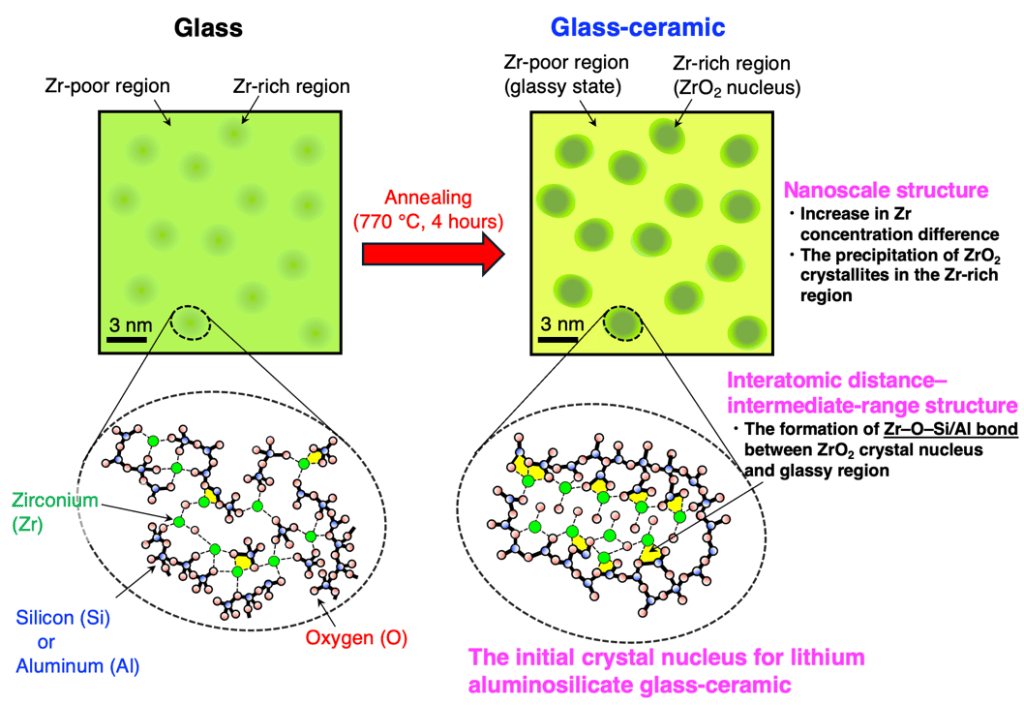
SPring-8Direct Observation of a Glass Hardening Process —Crystal Nucleation Model Developed Based on Multiscale Structural Analysis Using Synchrotron X-Ray Radiation—UPDATE :
-
SPring-8How to Acquire Highly Accurate Data at SPring-8-II: Quantifying the Relationship between Bunch-Modes and Photon-Counting DetectorsUPDATE :

-
SPring-8Producing very bright sub-micrometer beams of high-energy X-rays
– Observation of microareas inside thick metal samples has become possible –UPDATE :
-
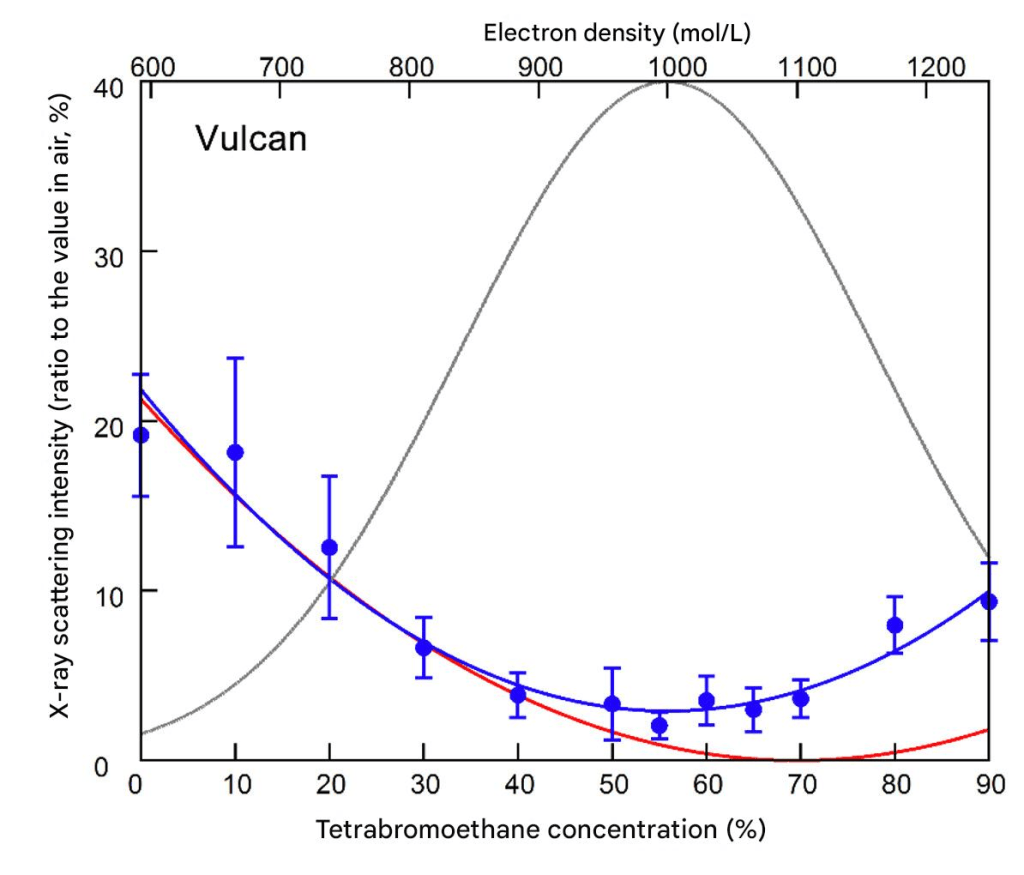
SPring-8A new technique for exclusive visualization of platinum particles in catalysts used in fuel cellsUPDATE :
-
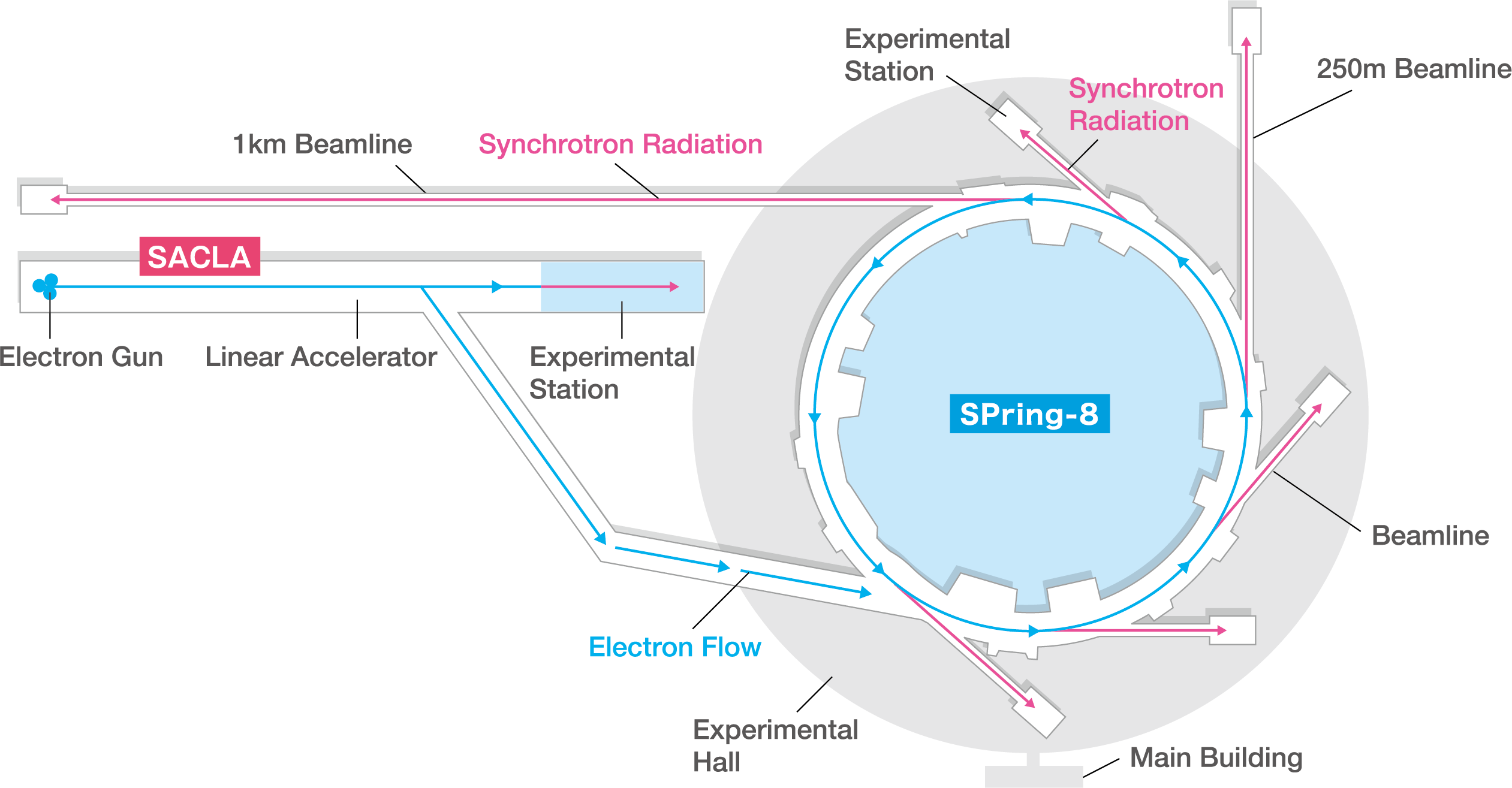
An electron beam is extracted from a tungsten electrode using an electron gun. The principle is the same as in CRT TVs and X-ray equipment, but a high voltage of approximately 180 kV is used.
-
After accelerating the electron beam to 1 GeV in the 140 m long Linear Accelerator, it is accelerated to 8 GeV in the 396 m circumference racetrack-type Synchrotron and sent to the Storage Ring.
-
The electron beam circulates in the Storage Ring with a circumference of 1,436 m while maintaining an energy of 8 GeV. During this time, synchrotron radiation is emitted by bending magnets and insertion devices (undulators).
-
At the beamline, X-rays of wavelengths suitable for the experimental purpose are extracted from the synchrotron radiation using spectrometers and focusing mirrors, and then irradiated onto the sample in the experimental hatch.
-
Detectors read X-rays emitted after irradiating a sample, changes in the sample itself, and light or electrons secondarily emitted from the sample, and the data is then analyzed.
-
By understanding the structure, properties, and temporal changes of matter in detail, various phenomena from life to the universe are elucidated, leading to the discovery of "theories" and "principles" that govern them.
-
Individual "discoveries" found in various phenomena are integrated and eventually turn into "innovations" that change our lives and civilization. This is essential for the sustainable development of humanity and the Earth, and is what SPring-8/SACLA should always pursue.
-
This facility conducts research and experiments using synchrotron radiation generated from accelerated high-energy electron beams. The variety of fields and research examples include:
- Use in Material Science: atomic and electron structures of advanced materials, material properties under extreme conditions, creation of new substances, material modification, etc.
- Applications in Life Sciences and Medicine: Structural analysis of biological materials such as proteins (→ research on life mechanisms, pharmaceutical development, etc.), and high-resolution imaging of biological samples using refraction contrast imaging methods, etc.
- Applications in Environmental Science: analysis of catalysts for environmental remediation, analysis of trace environmental pollutant elements in biological samples, etc.
- Use in Earth and Space Science: structural and state analysis of deep-earth materials, structural analysis of meteorites and cosmic dust, etc.
- Industrial Use: Utilized for material evaluation and structural analysis of proteins in industry.
-
Twice a year, we accept research proposals to use the facilities. For more details, herePlease click
-
SPring-8 users include national, public and private universities, research institutes and companies within Japan, as well as universities and research institutes from overseas.
-
Site Tour Pageprovides information regarding site tours. There is a course where you can view part of the Experimental Hall through glass. Please check the details on that page and apply via the tour application form.

