Mission
Responding to societal needs with the world's highest-performance synchrotron radiation

Synchrotron Radiation brightly illuminates a sustainable society
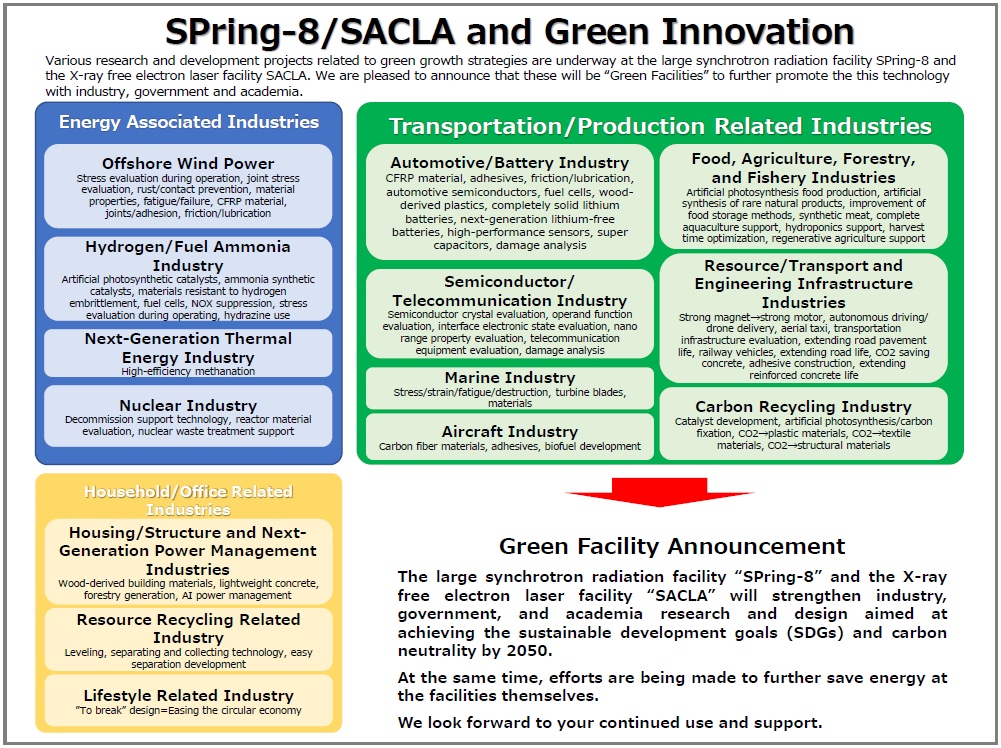
The Large Synchrotron Radiation Facility “SPring-8” and the X-ray Free Electron Laser Facility “SACLA” will provide even stronger support than ever for R activities by industry, government, and academia toward achieving the Sustainable Development Goals (SDGs) and carbon neutrality by 2050. At the same time, we will further advance efforts to make the facilities themselves even more energy-efficient. We respectfully ask for your continued and increased use and support.
Background
The Large Synchrotron Radiation Facility “SPring-8” and the X-ray Free Electron Laser Facility “SACLA” have provided industry, academia, and government users with the world’s highest-performance light for seeing the nano scale (nm; 1 nm is one-billionth of a meter). Observation and control in the nano region are key R elements in green fields that contribute to carbon neutrality, and have already delivered major results in storage batteries, fuel cells, catalyst development, and more.
Accordingly, to help achieve the Sustainable Development Goals (SDGs) and carbon neutrality in 2050, we have made this declaration so that you can use the world’s highest-performance light available at both facilities across the fields identified in the Green Growth Strategy, and to further strengthen support for industry, government, and academic users in opening up new fields that contribute to green innovation.
Declaration
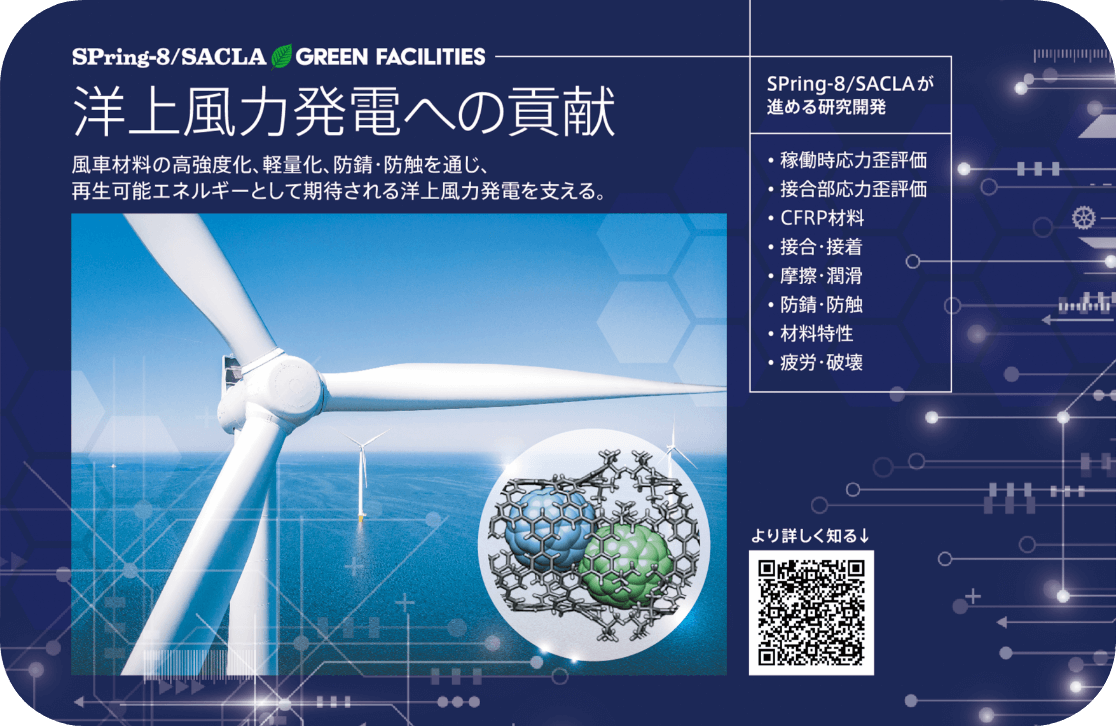
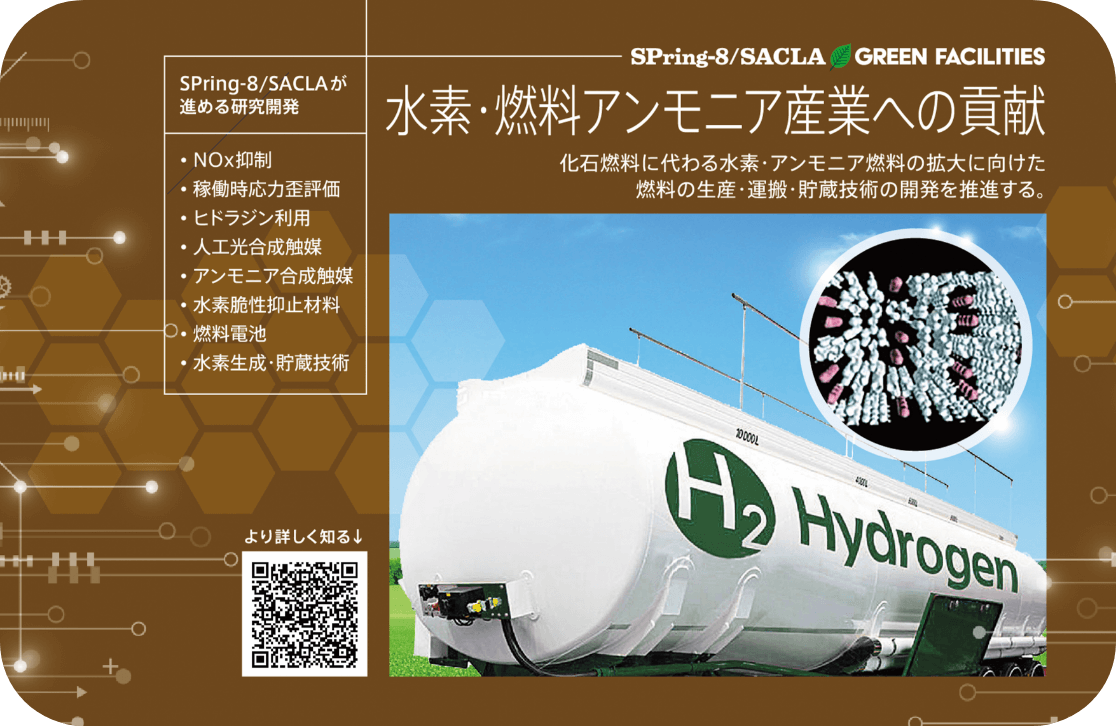
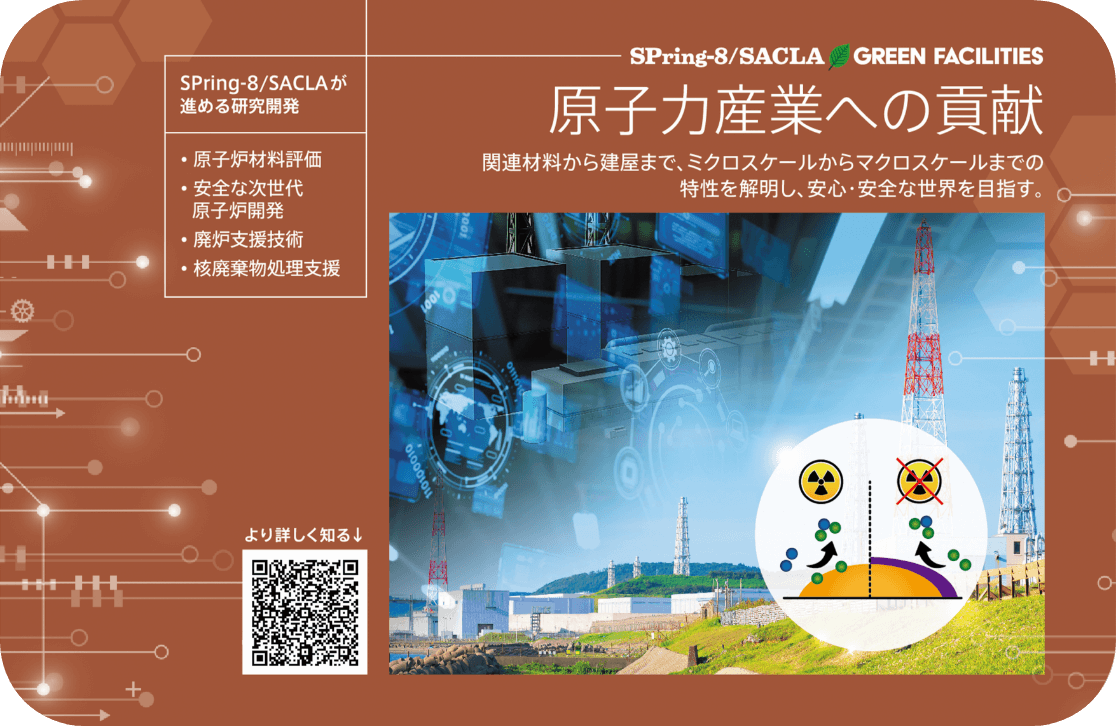
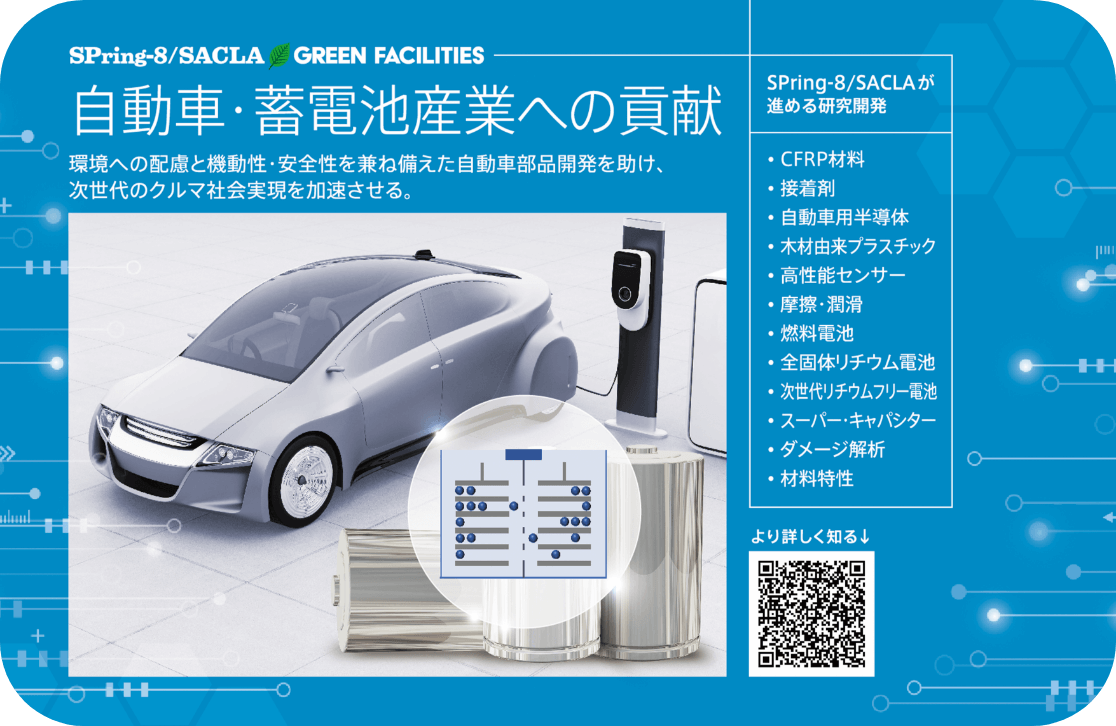
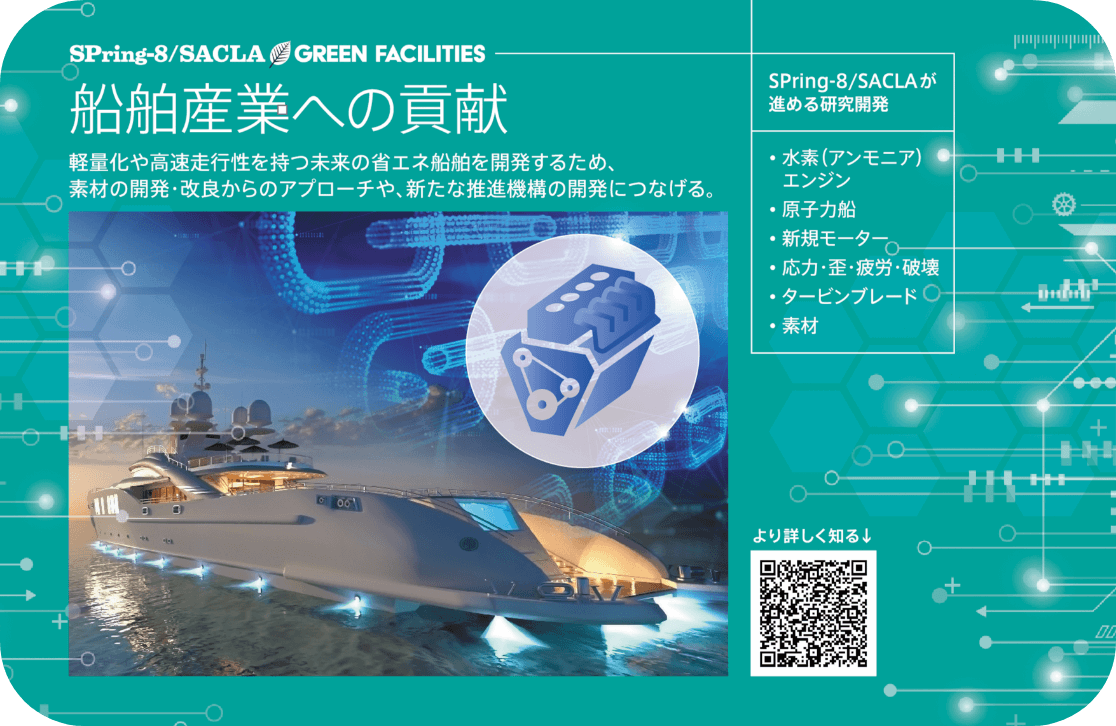
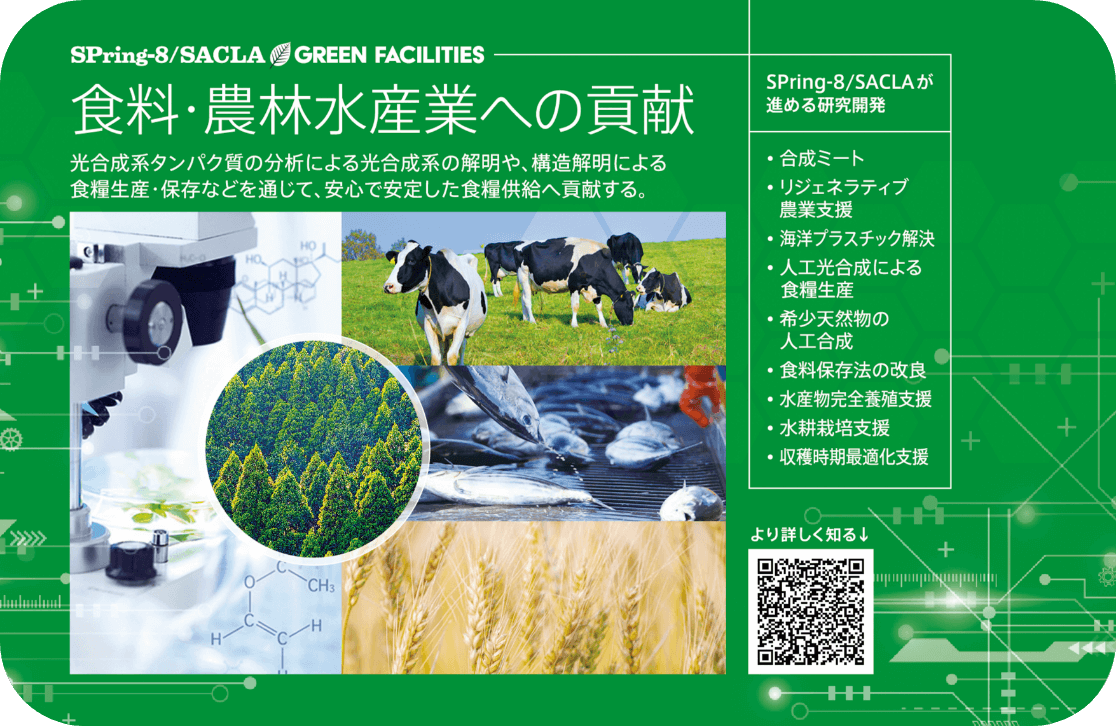
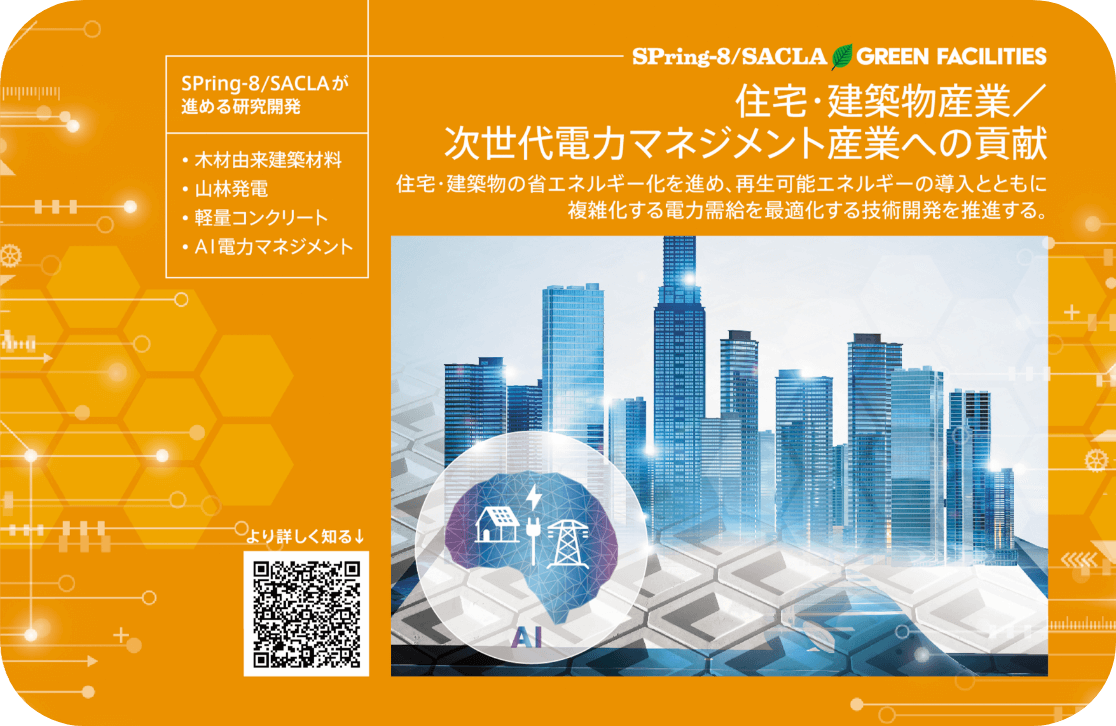
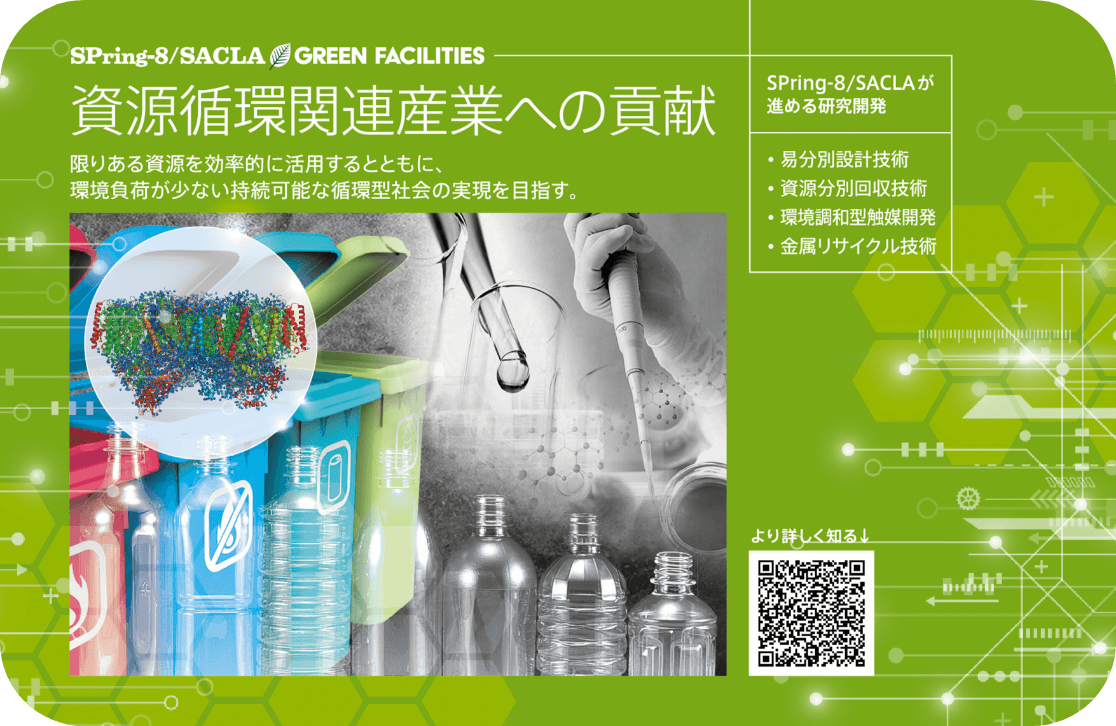
At SPring-8 and SACLA, research topics related to all 14 fields identified in the Green Growth Strategy are being carried out. In the hope that more people aiming for green innovation will use both facilities as a means to solve challenges, we hereby declare both facilities to be Green Facilities.
Future
SPring-8’s 2050 carbon-neutral goal is ambitious and requires industry, government, and academia to work together as one. As a first step, we have issued the Green Facility Declaration, and we look forward to many like-minded partners following suit. As concrete next steps, we plan to hold research meetings and provide user support that contributes to green innovation. Through these activities, we will work with all of you to drive innovation toward achieving carbon neutrality in 2050.